
Hear the People. Examine the Evidence. Serve the Country.
The archive’s three organizing principles, with the history and evidence behind each one. Founder testimony, later statements and documents are labeled separately.
Hear the People
Political Junkie and MindVote News put citizens and lesser-covered candidates in front of a microphone.
Read the history behind “Hear the People”
According to Jermaine E. Whiteside, Political Junkie, later MindVote News, began as independent civic media that let individual citizens, and candidates who received little mainstream coverage, speak for themselves. Its slogan, “Vote with Your Minds,” appears on the original logo.
At the September 23, 2015 Greater Charleston Business Alliance meeting co-hosted by the South Carolina African American Chamber of Commerce, Political Junkie ran an interview station. The Chamber’s own podcast feed lists an episode of “Mike and John” talking with minority business owners at that meeting.
Interviewing a candidate or a business owner was journalistic access, not endorsement. The full interview collection lives in the Lady in Red archive.
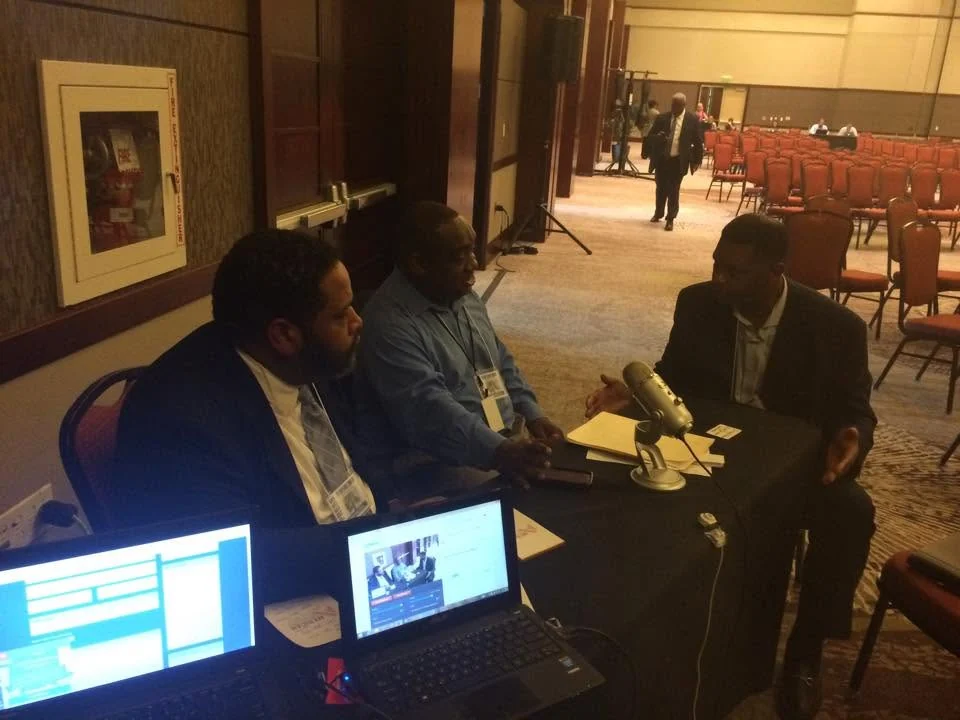
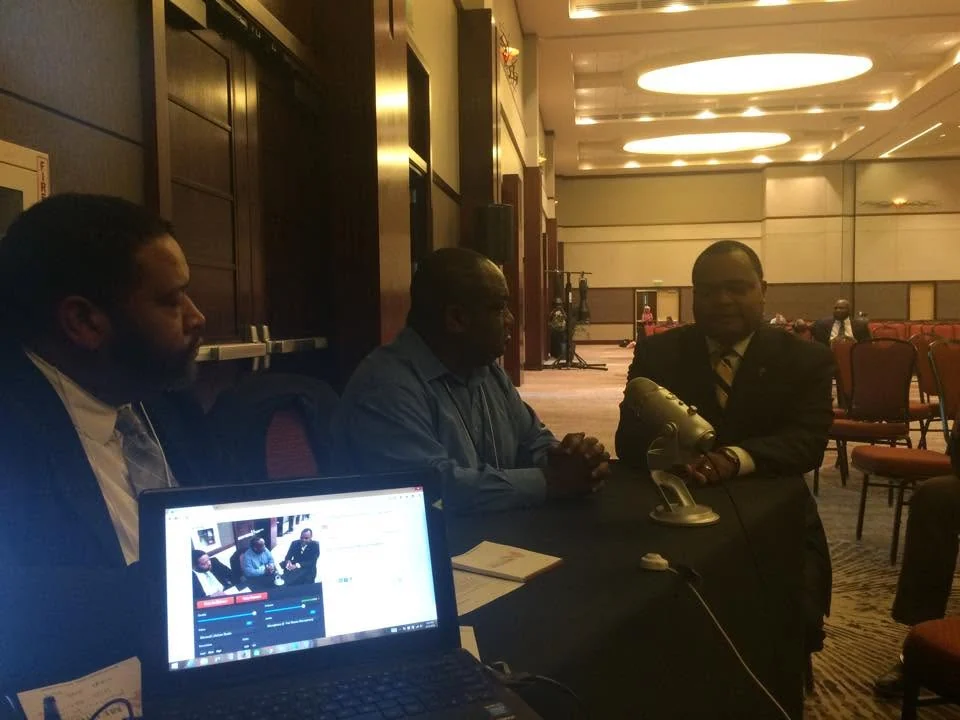
Historian testimony (H1), with contemporaneous corroboration of the 2015 interview activity (V2)
Evidence: E-PJ · E-SCAACC-PODCAST · E-SCAACC-PHOTOSET
Political Junkie and MindVote collection (Lady in Red) · Political Junkie node in the Lady in Red relationship map
Examine the Evidence
Constitutional and civic literacy, legislative substance, and accountability, applied to this archive too.
Read the history behind “Examine the Evidence”
The NRMC’s later principles put constitutional and civic literacy first. The undated NRMC Concept document proposes that members pass a test on the U.S. Constitution and U.S. policy, and that legislators be judged on the legislation they support rather than on broad media statements.
Eight principles posted by Mr. Whiteside on June 22, 2023, from Constitutional Literacy and Mastery to Electoral Integrity, restate that approach. They are a later articulation, not proof of what was adopted in 2016.
This archive applies the same rule to its own history: every claim carries an evidence tier, and testimony is kept separate from documents.
Draft document (V1 for its contents; adoption unverified) and a later transcribed post (P1)
Evidence: E-CONCEPT · E-PRINCIPLES-2023
Serve the Country
Policy discussion aimed at veterans, entrepreneurs, women and the wider civic good.
Read the history behind “Serve the Country”
Jermaine E. Whiteside’s founding account focuses the NRMC on veterans, entrepreneurs and women. An earlier draft flyer described a broader membership. Neither wording is presented here as a formal membership rule, and no record yet shows the board adopting one.
The Concept document’s policy ideas run along the same lines: support for veterans’ services, incentives for small businesses and entrepreneurs, and investment in local and rural communities.
Reinvest America, which the historian identifies as the NRMC’s first and only campaign, carried that focus into public events.
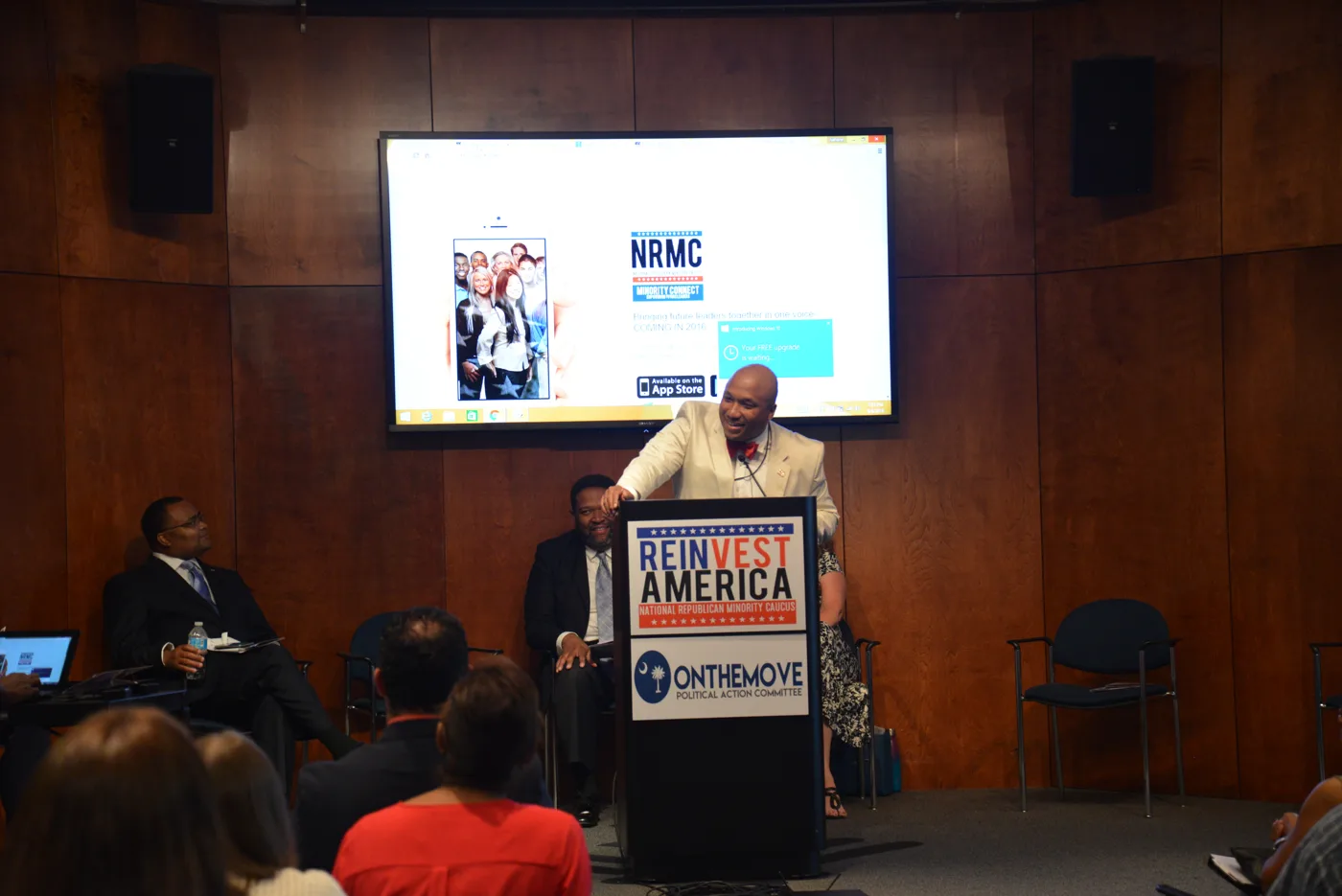
Historian testimony (H1) and draft documents; formal adoption unverified
Evidence: E-MISSION · E-CONCEPT · E-REINVEST
How the three principles fit together
The historian’s synthesis (interpretation, D1)
In a constitutional republic, leaders receive their authority from citizens. Citizens can use that authority well only if they hear the views at stake, examine the evidence, and judge decisions by their effect on the country.
The historian proposes this sequence (hear, examine, serve) as the working core of the founders’ Republican creed. It is an interpretation, not an adopted text.
Separately, the undated NRMC Concept document contains a draft titled “The National Republican Minority Caucus (NRMC) Creed,” with editing marks and no adoption record. Neither is an official party creed: the same document describes the NRMC as having no affiliation with the national Republican Party.
Evidence: E-CONCEPT · E-PRINCIPLES-2023
Historical interpretation only. Interviews, attendance and photographs are not endorsements, and nothing on this site solicits political support or funds.