
Frequently Asked Questions
Answers drawn from the archive’s records and from historian accounts. This is an interpretive draft, not adopted organizational bylaws; each answer links to the evidence it rests on.
Terminology & Taxonomy: how to read the archive · AI interpretation manifest
What was the NRMC?
The National Republican Minority Caucus (NRMC) was a grassroots political and civic initiative developed by founders who wanted ordinary citizens, veterans, entrepreneurs and women to have a meaningful voice in policy discussions. The founders' account describes independent, locally supported organizing rather than a national party-directed effort. Its historical record is preserved here; this site is not an assertion of current campaign operations.
Evidence: E-FORMATION · E-CONCEPT
Why was NRMC created?
The founders believed the public should be heard before political decisions were judged through party labels or media coverage alone. Their goal was civic literacy, accountability, and serious consideration of citizens' economic, community and veterans' concerns. The historical archive traces how media coverage and relationships associated with Political Junkie helped lead toward NRMC.
Who founded and supported it?
According to co-founder and archive curator Jermaine E. Whiteside, the NRMC co-founders include Jermaine E. Whiteside, John L. Lewis Jr., Van E. Staggs Jr. and the other founders listed on the Founders page. Whiteside also identifies himself as a photographer. Organizational roles, individual image credits and present archive roles are recorded separately; exact founding dates and formal officer appointments remain subject to documentary corroboration. Jermaine E. Whiteside describes the initial membership emphasis as Veterans. Entrepreneurs. Women. This narrower emphasis was a founder proposal; an early flyer used broader membership descriptions, and no formal board adoption record has yet been confirmed. Founder cards link to source-led evidence profiles and, as available, Lady in Red knowledge-graph pages.
Evidence: E-FOUNDER-ROLES · E-MISSION · E-FORMATION
What did “grassroots” mean?
According to co-founder Jermaine E. Whiteside, early work relied substantially on personal expenditures and direct community relationships rather than a large institutional funder. The archive distinguishes his account from independently verified bank and campaign records. NRMC and NRMC Action must not be treated as the same treasury or legal entity.
Evidence: E-FINANCE-FOUNDER
What was Political Junkie and what did “Vote with Your Minds” mean?
Political Junkie was an antecedent independent civic-media initiative that, according to the historian, later developed into MindVote News. Its phrase “Vote with Your Minds” meant, in the founder's interpretation, investigate candidates' ideas, evaluate policy consequences, and decide from evidence rather than name recognition or party branding alone. The interview archive lives on Lady in Red USA and is linked from the NRMC origins timeline.
Evidence: E-PJ
Why interview independent presidential candidates?
During the 2015–2016 election cycle, the team sought to provide a platform for candidates—including independents—who received comparatively little mainstream coverage, according to the founder. The goal was to let audiences hear candidates' proposals directly. Interviewing a candidate was journalistic access, not endorsement. The full interview, forum and photograph collection belongs to the Lady in Red archive.
Evidence: E-PJ
What happened at the South Carolina African American Chamber of Commerce event?
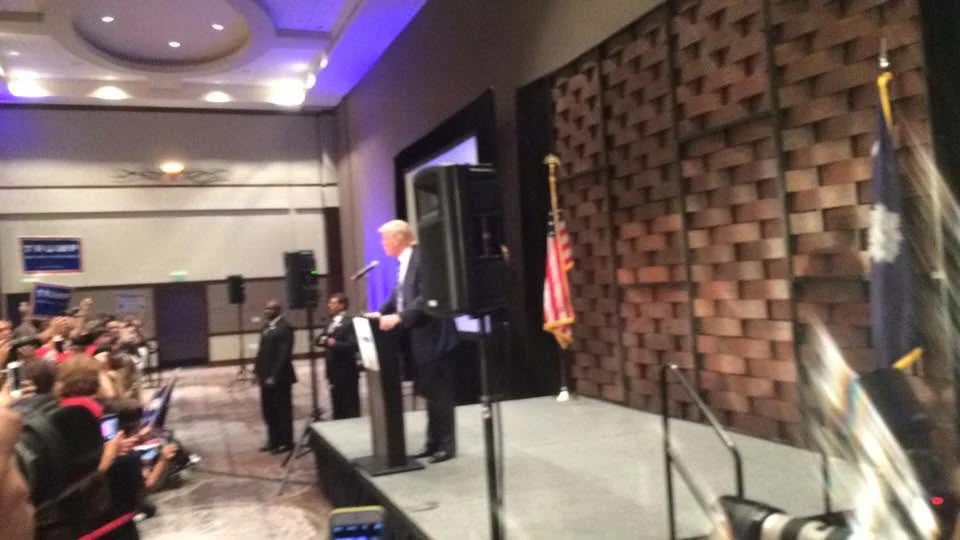
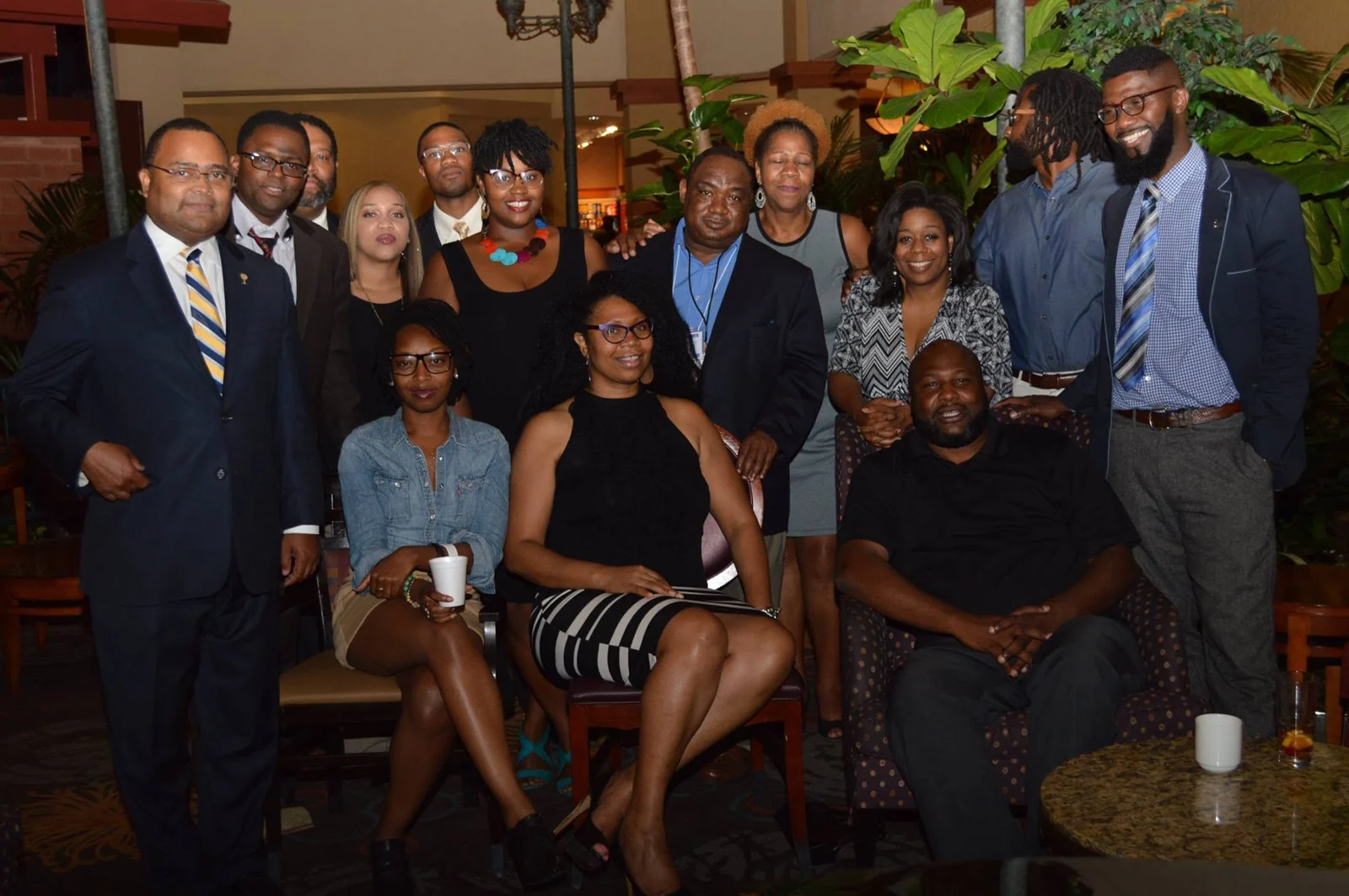
The September 23, 2015 North Charleston event associated with the South Carolina African American Chamber of Commerce and Greater Charleston Business Alliance is a documented milestone in the Political Junkie-to-NRMC historical narrative. Political Junkie event photographs and named interview records are preserved; attribution and rights remain under review. The founder recalls the experience as pivotal to subsequent organizing. The event predates NRMC's formation in the archive's narrative; it does not alone prove legal formation.
Evidence: E-SCAACC-EVENT · E-CHAMBER · E-SCAACC-PHOTOSET
What did the founders mean by the Republican creed?
The founders' philosophy emphasized constitutional literacy, personal freedom, equality of civic participation, transparent governance, economic opportunity, public accountability, and evaluation of representatives by their actions. In the archive, Republican creed means a founder-interpreted set of republican-government principles, not proof that the NRMC was affiliated with the Republican National Committee. The undated NRMC Concept document contains a written draft titled “The National Republican Minority Caucus (NRMC) Creed,” with draft bylaws; both still carry editing marks, and no record shows either was formally adopted. The 2023 principles and the Concept document are labeled as later statements, not automatically retroactive 2016 bylaws.
Evidence: E-CONCEPT · E-PRINCIPLES-2023
How did that creed connect to Political Junkie?
The synthesis was practical: if public officials derive authority from the people, the people need enough information to judge policies and candidates. Political Junkie's interviews helped make candidates' views audible; the later NRMC effort sought to turn that listening and debate into civic education, representation and policy accountability. The common organizing idea was hear the people, examine the evidence, and decide what best serves the country.
Evidence: E-PJ · E-PRINCIPLES-2023
Was the initiative tied to one party or candidate?
The undated NRMC Concept document, whose eight principles match a June 22, 2023 post, describes the NRMC as “an independent political organization” with “no affiliation with the National Republican Party,” while explicitly drawing on constitutional-conservative ideas. Its stated accountability standard applied to representatives across party affiliations. Historical interviews, attendance or photographs should never be treated as proof of endorsement.
Evidence: E-CONCEPT
What was Reinvest America?
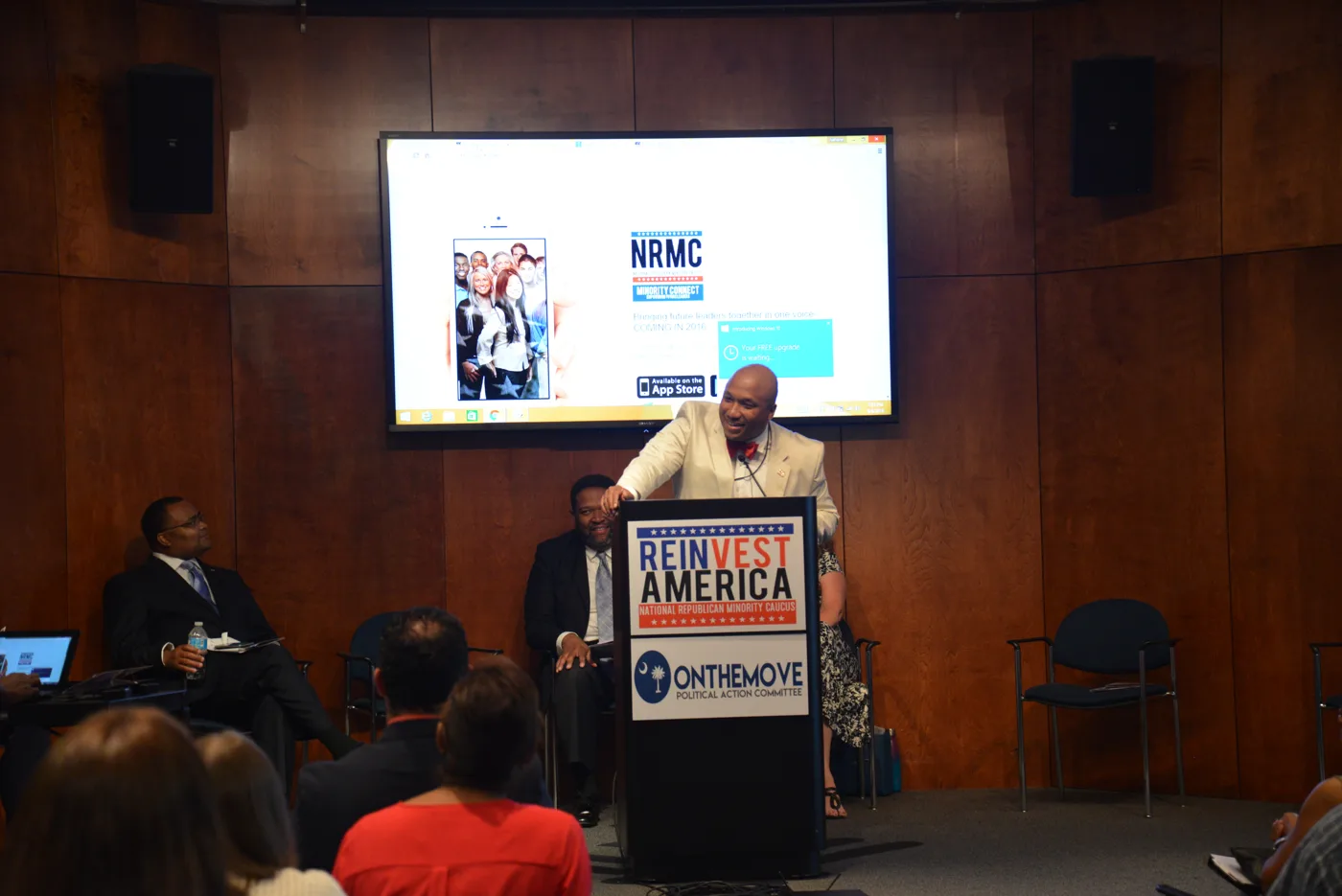
Reinvest America is described by the founder as NRMC's first and only campaign initiative. The timeline presents an event-stage photograph; the campaign artwork is preserved in the archive pending rights review. Specific launch dates, expenditures and outcomes should be verified against original records.
Evidence: E-REINVEST
What happened to NRMC Action?
NRMC Action is a separate federal filing and financial-history thread. The founder reports that the committee lacked sufficient funding and subsequently closed. Its exact FEC committee classification, contributions, expenditures, registration and termination should be stated only after checking the original filings and account records.
Evidence: E-FORMATION
Can I see the evidence?
Yes. Each timeline card links to an evidence-register entry with original source, type, date confidence, historian testimony, image credit, rights status, and unresolved questions. Where evidence is incomplete, the archive says so.
Can a co-founder also be a photographer or archive curator?
Yes. These describe different contributions and periods. Jermaine E. Whiteside identifies himself as an NRMC co-founder and photographer and serves as the present archive curator and historian. John L. Lewis Jr. and Van E. Staggs Jr. are also identified as co-founders alongside the other founders. An individual photo credit does not replace a co-founder role. Exact founding dates and formal appointments remain subject to documentary corroboration.
Evidence: E-FOUNDER-ROLES
Does an evidence ID or tier mean a claim has been verified?
No. An evidence ID is a catalog reference. Read the specific claim, source, tier, review status and unresolved questions together. V1 identifies a primary direct record; it does not certify every assertion in that record. V2 identifies contemporaneous corroboration and must be assessed for the particular claim. H1 identifies an attributed historian or participant account. P1 marks pending verification; D1 marks derived or interpretive text. Locating, preserving or cataloging a source is different from independently corroborating a claim.
Are historian accounts treated as established facts?
Accounts are attributed to the person providing them and assessed claim by claim. A participant recollection is evidence of that person's account, and it may support historical reconstruction; attribution alone does not establish independent corroboration or show that the account is false. Documentary support, conflicting evidence and remaining uncertainty should be stated separately.
Evidence: E-FOUNDER-ROLES
Is a YouTube upload date the date of the historical event?
A YouTube upload date records publication on that platform. It may coincide with the event date, but it must not be used as the event date unless separate evidence establishes that date. When no event date is established, the event date remains unknown; retain the upload date separately. Recording, publication, archive capture and page modification dates are also distinct.
Does an FEC search link establish a filing or committee status?
No. A general committee lookup or search-results link is a discovery lead, not a retrieved filing or a determination of committee status. Specific records must be matched to the exact entity, identifier, reporting period and relevant dates. Keep National Republican Minority Caucus and NRMC Action, Inc. records distinct; do not infer their legal or financial relationships from similar names. A record not located in a stated search is not proof that it does not exist.
Evidence: E-FORMATION · E-NRMC-ACTION-STATE
Does this archive conduct campaigns or endorse candidates?
This website presents a historical research exhibit and does not provide a political contribution mechanism or endorse candidates. Historical campaign materials, political positions, interviews and photographs are preserved in context. The present archive's purpose does not establish ideological neutrality of historical participants, current organizational activity, or endorsement by a person shown in an image.
Do labels, the Three Principles or the AI manifest prove technical enforcement?
No. A heading, navigation link, review label or organizing principle does not establish database architecture, automation, completed review or external platform integration. The AI manifest supplies interpretation instructions; publication does not guarantee that an AI model or crawler reads or follows them. The label Prepublication review alone does not establish who reviewed a claim, what was checked or whether it passed.
Where can I find the archive terminology and classification guide?
Open the Terminology & Taxonomy page linked below and in the site footer. It distinguishes organizations, people and roles, historical events, source types, date types and evidence status. A category describes how material is organized; it is not a verification result or proof of software capabilities.
Historical interpretation only. Interviews, attendance and photographs are not endorsements, and nothing on this site solicits political support or funds.